

Can You Add Motorized Screens to an Existing Porch or Pergola?
You already like your porch or pergola. The location works. The furniture fits. The space feels connected to your home.
You would just like a little more flexibility.
That leads to a practical question: can motorized screens be added to an existing porch or pergola without starting over?
An existing structure may be a candidate, but suitability needs to be evaluated rather than assumed.
Motorized screen systems include different installation approaches, such as surface-mounted and recessed configurations. The appropriate approach depends on the product and the conditions at your home.
Here is what to consider before choosing a screen.
Look at the openings, not just the patio
Begin with the individual spaces where screens would lower.
How wide and tall is each opening? Are the sides straight? Does the floor slope? Are there railings, trim details, or changes in elevation?

Instead of measuring only the overall patio, photograph each proposed screen location separately.
A wide-open side, a doorway, and an opening above a railing may require different design responses. Treating them as identical can overlook details that affect the finished result.
Decide how the hardware should relate to the structure
The screen material is only one part of the installation.
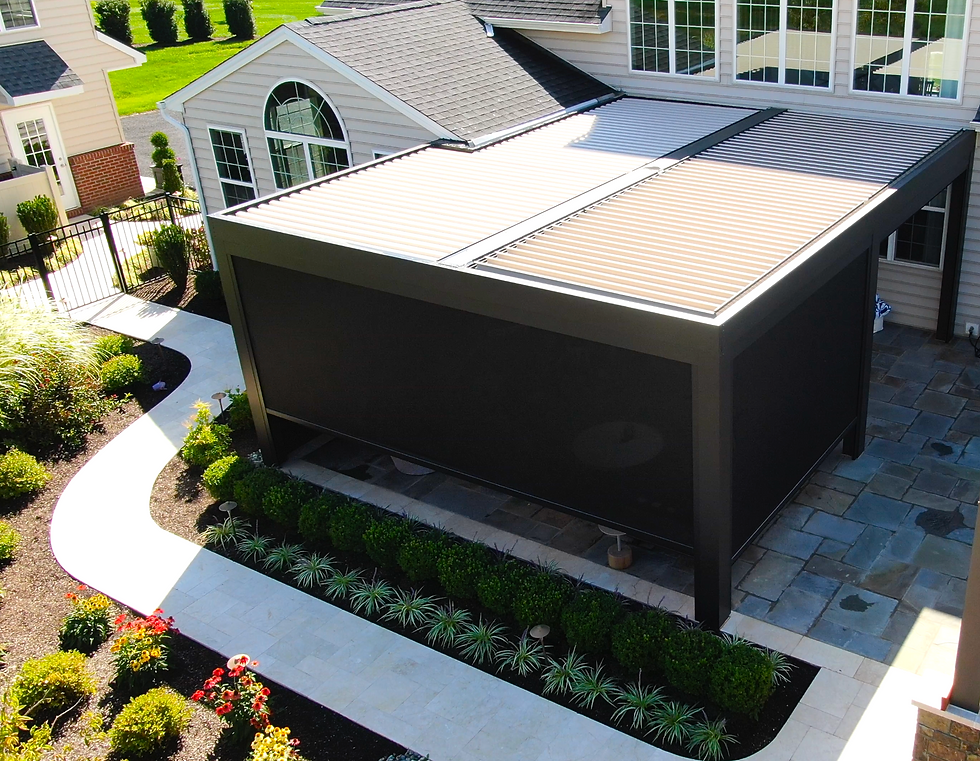
Ask where the housing, guides, and other visible components would sit. Review their relationship to columns, beams, trim, and existing finishes.
A useful design conversation includes both operating positions: how the installation will look with the screen lowered and what will remain visible when it is raised.
Also ask your installer to evaluate the attachment conditions. A finished surface should not automatically be treated as a suitable structural mounting location.
Plan power and controls before choosing the final layout
Ask what the proposed system requires for power and how the screens will be operated.
Would you prefer to control openings separately? Is a wall control important? Where should the control be accessible from inside the space?
These are practical decisions, not just technology preferences.
A screen that looks right on a drawing still needs to work naturally with the way you enter, leave, and use your porch.
Consider the entire enclosure when insects are the concern
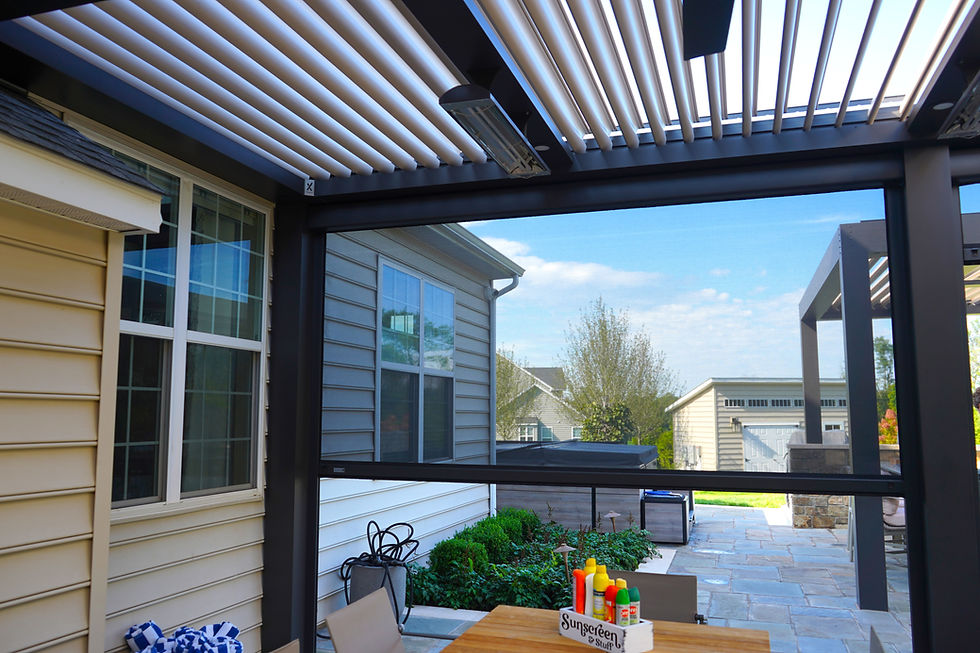
Adding screens along the sides of a pergola does not automatically create a fully screened room.
An open roof, unscreened doorway, or gap around another part of the structure may still allow insects to enter.
Be specific about your goal. Managing one exposed side is a different project from creating a more comprehensively screened seating area.
That distinction should shape the design from the beginning.
Preserve the routes you use every day
Imagine carrying dinner outside, letting guests into the yard, or moving furniture for a gathering.
Which opening would you use? Would a lowered screen interrupt that route?
Discuss everyday access alongside appearance. The best layout should not make a familiar space more awkward to navigate.
Bring useful information to your appointment
Start with wide photographs, close-ups of the proposed mounting areas, approximate dimensions, and a description of your main concern. Existing drawings can also be helpful.
Professional measurements and a site review can then establish what is appropriate for the actual structure.
You do not need to arrive with the solution already selected. You need a clear picture of what you would like to improve.
Considering screens for a porch or pergola you already have?
#MotorizedScreens #PorchUpgrade #PergolaScreens #CoveredPatio #OutdoorDesign #DistinctiveOutdoorStructures

Comments